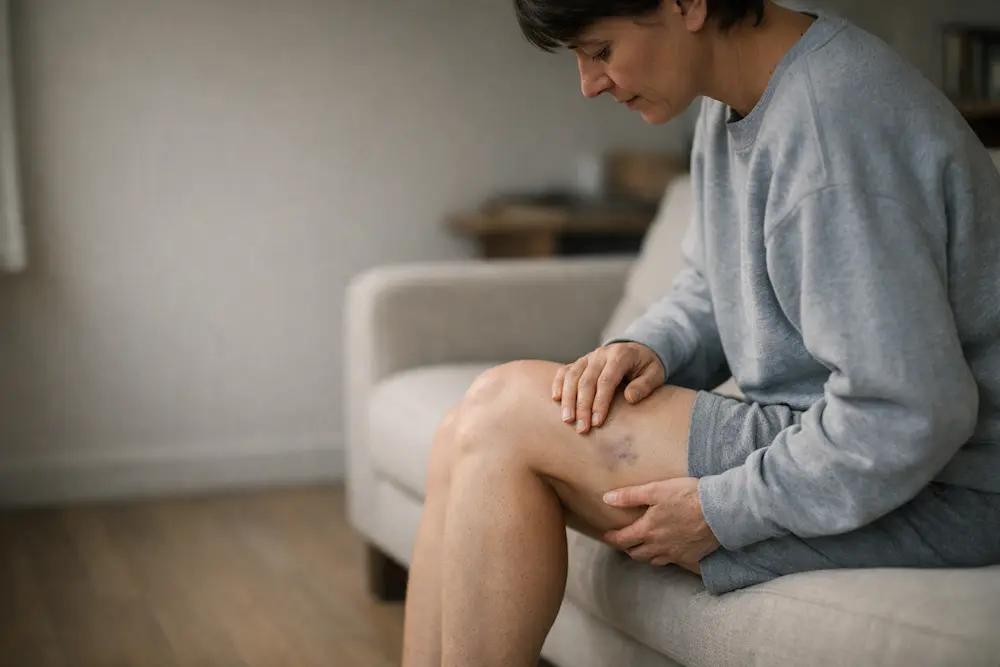
This guide explains why bruising happens, what’s normal vs not, how long it should last, and how to prevent it next time – including massage gun bruising.
⚡ Quick Answer / TL;DR
Is bruising after massage normal? Yes, mild bruising can be normal – especially after deep tissue massage or sports massage, where firm pressure is used to reach deeper layers of muscle and fascia.
Most common causes: Pressure that’s slightly too intense, fragile capillaries (tiny blood vessels), tight tissue being worked firmly, or repeated passes over the same area (common in hamstrings, glutes, calves, and shoulders).
How long does it last? Typically 3–10 days, fading like a normal bruise. It should gradually improve, not get worse.
When to worry: Bruising that is severe, widespread, very painful, keeps appearing after every treatment, or occurs alongside unusual bleeding or swelling – especially if you’re on blood thinners. If in doubt, contact NHS 111 or your GP.
What Bruising After Massage Actually Means
A bruise forms when small blood vessels (capillaries) break under the skin, letting a small amount of blood leak into nearby tissue. Your body then clears it over a few days, which is why bruises change colour as they heal.
Massage can sometimes trigger bruising, particularly when:
- Pressure is firm and sustained (deep tissue work)
- A therapist uses friction, stripping, or trigger point techniques (sports massage)
- The same muscle area is worked repeatedly
- Tissues are tight, sensitive, or already irritated (and react strongly)
Important point: bruising is not automatically “bad” – but it is feedback. If you bruise frequently, it usually means the intensity needs adjusting or you bruise more easily than average.
Common Places to Bruise After Massage
Some areas are simply more likely to show bruising, either because they’re tight, bony, or commonly treated with firmer pressure:
- Hamstrings (especially after repeated stripping work)
- Glutes / hip rotators (deep pressure is common here)
- Calves (particularly the outer calf)
- Upper trapezius (top of shoulders)
- Inner thigh / adductors (tissue can be sensitive and close to bone)
Is Bruising After Sports Massage Normal?
Bruising after sports massage is fairly common because sports massage often includes deep, targeted techniques designed to address stiffness, muscle tone, and tender trigger points.
Sports massage is more likely to cause bruising when it includes:
- Deep stripping along muscle fibres (e.g. calf, IT band area, hamstring)
- Friction work around tendons (done carefully)
- Trigger point pressure held for 10–30 seconds
- Repeated passes to reduce tightness in one specific spot
If your bruise is small (coin-sized or smaller), mildly tender, and improves each day, it’s usually within the normal range.
Bruising After Deep Tissue Massage: Why It’s More Common
Deep tissue massage bruising is one of the most searched-after side effects for a reason – it’s simply more likely to happen. Deep tissue work uses slower, heavier pressure to influence deeper muscle layers and connective tissue.
Bruising after deep tissue massage is more likely if:
- You’re new to deep tissue and not used to firm pressure
- You have very tight areas that need slower work to release
- The therapist uses elbows/forearms for depth
- You request “as hard as possible” pressure (this often backfires)
It’s also more common in areas where tissue sits closer to bone or has less natural padding.
Does Bruising Mean the Massage Was “Working”?
Not necessarily. A massage can be very effective without bruising. Bruising usually means the pressure exceeded what your capillaries and tissue could tolerate at that time.
In most good clinics, the goal is:
- Effective treatment
- Minimal unnecessary tissue irritation
- Recovery-friendly results (especially if you train)
Why You Can Bruise Even With a Good Therapist
Even a well-delivered treatment can leave a small bruise sometimes. This is more likely if your tissue was already tight or inflamed, you’ve trained hard recently, you’re dehydrated or run down, or your body simply bruises more easily than average. The key difference is that a good therapist adjusts quickly once they know how you respond.
Massage Gun Bruising: Causes, Risks, and Prevention
Massage gun bruising is increasingly common because many people use percussion devices with too much intensity, too long, or on the wrong areas.
Massage guns create rapid, repetitive force into tissues. That can be helpful, but the downside is that you can easily go past your tolerance without realising it – especially if you crank up the intensity.
New to massage guns? Here’s a simple breakdown of how they work (and how to use them safely): massage guns explained.
Why a Massage Gun Can Cause Bruising
- High frequency impact against fragile capillaries
- Too much pressure (pushing the gun hard into the muscle)
- Too long on one spot (common mistake)
- Using it on bony areas (shin, collarbone area, spine)
Safe Massage Gun Rules (Simple)
- Keep sessions short: 30–60 seconds per muscle group
- Use light pressure: let the tool do the work
- Avoid bones and joints: stay on soft tissue only
- Don’t use on fresh injuries: swelling and bruising risk increases
- Start low: increase gradually over weeks, not minutes
If you’re getting bruises from home tools, it’s a clear sign to reduce pressure and time. For most people, the best results come from gentle, consistent use rather than aggressive sessions.
Normal vs Not Normal: Bruising After Massage Checklist
Here’s a simple guide to help you judge whether your bruising is within the normal range.
| What You Notice | Usually Normal? | What It Suggests | What To Do |
|---|---|---|---|
| Small bruise (coin-sized) | Yes | Local capillary irritation | Monitor, reduce pressure next time |
| Mild tenderness only | Yes | Normal post-treatment soreness | Hydrate, gentle movement |
| Large bruise (palm-sized) | Sometimes | Excess intensity or fragile tissue | Tell therapist, avoid heavy pressure |
| Bruising gets worse after 48 hours | No | Ongoing bleeding under skin / irritation | Seek medical advice if concerned |
| Widespread bruising in multiple areas | No | Possible clotting issue or medication effect | Speak to GP / NHS 111 |
Why Some People Bruise More Easily After Massage
Two people can have the same massage and react completely differently. Bruising risk is influenced by:
1) Medication and Supplements
Bruising can be more likely if you take anything that affects clotting, including:
- Prescription blood thinners (e.g. warfarin, apixaban – always tell your therapist)
- Regular aspirin
- Anti-inflammatory medication in some cases
- High-dose fish oil or similar supplements (varies person to person)
If you’re on anticoagulants, have a bleeding disorder, or bruise without clear cause, check with a clinician before having deep pressure work.
2) Skin and Capillary Fragility
Some people naturally have more fragile capillaries, especially as we age. This doesn’t mean anything is wrong – it just means pressure needs adjusting.
3) Training Load and Tissue Irritation
If you’ve been training hard, your muscles may already be inflamed or sensitive. Adding very deep work on top can increase soreness and bruising.
4) Dehydration and Recovery
Hydration affects how well tissue tolerates pressure and how quickly it recovers. Being run down, stressed, or sleep-deprived can also reduce your tolerance.
“Bruising certainly isn’t something we aim for! If a client bruises easily, I usually adjust the pressure and techniques to suit – you can still get a great result without leaving marks behind.”
— Sarah T, Sports Massage Therapist based in Beeston
What To Do If You Bruise After a Massage
For most mild bruising, treatment is simple: support the body’s recovery and avoid irritating the area further.
First 24 Hours
- Keep moving gently (light walking is ideal)
- Avoid heavy training on the bruised muscle
- Hydrate steadily throughout the day
- Cold compress if it feels hot or sore (10 minutes)
24–72 Hours
- Warmth can help if the area feels stiff
- Gentle stretching is fine if it’s comfortable
- Avoid massage guns directly on the bruise
What NOT To Do
- Don’t aggressively stretch a bruised area
- Don’t try to “break up” the bruise with more deep pressure
- Don’t go straight back into maximal lifting or sprinting if it’s painful
How To Prevent Bruising Next Time
If you bruise after massage, you don’t need to stop getting treatment. You just need a smarter approach.
1) Change the Pressure (Even Slightly)
Ask for one level lighter than last time. Many people assume “harder = better”, but deep pressure works best when your body can stay relaxed.
2) Avoid Repeated Deep Work on the Same Spot
If one knot is very sensitive, your therapist can often get a better result by working the surrounding tissue first, then returning later.
3) Time Your Massage Around Training
If you’re running hard sessions, a very deep massage the day before can leave you sore. Many runners do best with firm work 24–72 hours away from key training.
4) Mention Bruising History Upfront
Tell your therapist if you’ve bruised before, if you’re on medication, or if you’ve got an event coming up. That changes the plan.
⚠️ When to Seek Medical Advice (UK Guidance)
Contact NHS 111 or Your GP If:
- Bruising is severe or spreads rapidly
- You bruise very easily without clear cause
- You have unusual bleeding (gums, nosebleeds) alongside bruising
- The bruised area becomes increasingly swollen, hot, or very painful
- You are taking blood thinners and bruising is significant
Call 999 Immediately If:
- You have sudden shortness of breath or chest pain
- You faint or collapse
- You have rapidly worsening swelling with severe pain
Frequently Asked Questions
Is bruising after deep tissue massage normal?
Yes, deep tissue massage bruising can happen, especially if the pressure was intense or you bruise easily. Small bruises that fade over a week are usually not a concern.
Is bruising after sports massage normal?
It can be. Bruising after sports massage is more likely when trigger points, friction, or firm stripping techniques are used on tight muscle.
How long should bruising last after a massage?
Most bruises fade within 3–10 days. If it’s getting worse after 48 hours or still prominent after 2 weeks, speak to a clinician.
Should I massage a bruise after a treatment?
No. Avoid deep pressure directly on bruised tissue. Stick to gentle movement and let it heal.
Can a massage gun cause bruising?
Yes. Massage gun bruising usually comes from too much pressure, too long in one area, or using the tool on bony spots.
Is bruising a sign of a bad massage?
Not always, but it often means the pressure was a bit too strong for your body at that time. A good therapist will adjust based on your response.
Quick Reference: What To Do If You Bruise
- Same day: hydrate, gentle walking, avoid heavy training
- 24 hours: cold compress if sore, otherwise rest and move lightly
- 48 hours: warmth if stiff, no deep pressure on bruise
- 3–10 days: bruise should fade normally
- If severe or unusual: NHS 111 or GP
Summary
- Mild bruising after massage can be normal – especially after sports or deep tissue work.
- Bruising happens when small blood vessels break under pressure.
- Massage gun bruising is usually a sign you’re using too much intensity or time.
- Bruises should fade over 3–10 days and improve steadily.
- If bruising is severe, widespread, or recurrent, seek medical advice.
Medical Disclaimer: This article is for educational purposes and is not a substitute for medical advice.