
⚡ Quick Answer / TL;DR
Does massage help neck and shoulder pain? Massage can make a stiff, sore neck and shoulders feel better in the short term, and the risks are low. The best evidence, a 2024 Cochrane review of 33 trials, found that massage probably makes little to no difference to pain or function over the following weeks compared with a dummy massage, and the reviewers rated their own evidence low certainty. Most non-specific neck pain tends to settle largely on its own within a matter of days or weeks. What tends to shift it is keeping the neck moving, changing whatever set it off, and getting stronger.
Immediate steps: Keep the neck moving gently rather than resting it completely. Use heat or a cold pack, and sleep on one low, fairly firm pillow tonight.
When to worry: Sudden severe pain, weakness or pins and needles in an arm, or a stiff neck with a fever are reasons to get medical help, not a massage. The full list of red flags is further down.
When Your Neck and Shoulders Will Not Loosen Off
It usually starts as stiffness. You go to check a blind spot and your head stops short, and there is an ache that runs from the side of your neck into the top of the shoulder blade and has not shifted by the end of the day.
Neck pain does not always stay in the neck. It can refer into the upper back and arms, and it can bring on headaches that start at the base of the skull. That is why a sore neck and a sore shoulder so often turn up together.
What We Know About Massage for Neck and Shoulder Pain
- Most of it settles by itself: non-specific neck pain usually resolves within days or weeks.
- It often comes back: around half of people still have low-grade symptoms or another episode a year on, so the useful question about any treatment is what it lets you do, not whether it ends the problem for good.
- The evidence is weak rather than absent: at twelve weeks, the Cochrane reviewers found little to no difference in pain, disability or quality of life between massage and a dummy massage.
- Hands-on work still sits in the guidelines: NICE notes a consistent recommendation for manual therapy as an option, alongside other treatment rather than instead of it.
- It is low risk: the downside the Cochrane review records is treatment soreness, which is mild and passes.
Why Your Neck and Shoulders Hurt in the First Place
1. Hours in one position
Sitting at a desk for a long time is one of the most common causes the NHS lists. It is the hours that do it more than any one posture, which is why the advice further down is about breaking up the time rather than sitting up straight. NICE calls the cause usually multifactorial, which means posture, neck strain, sport or work, anxiety and depression all feed in. Training load is a big one for very active people.
2. How you slept
Waking up with your neck locked to one side is another cause named by the NHS. Tonight, try to keep your head the same height as the rest of your body and avoid sleeping on your front.
3. A knock, a shunt or a fall
If your neck pain began after an accident, get it assessed before having it massaged. Whiplash in particular is slow to show itself: it can take several hours for the symptoms to start, and recovery usually runs to two or three months.
4. A nerve being irritated
A pinched nerve is on the NHS's list of causes too. If the neck pain comes with pins and needles, weakness or a cold arm, that is a reason to get it looked at rather than booked in.
What Massage Can and Cannot Do for a Sore Neck
1. Short-term ease is the realistic win
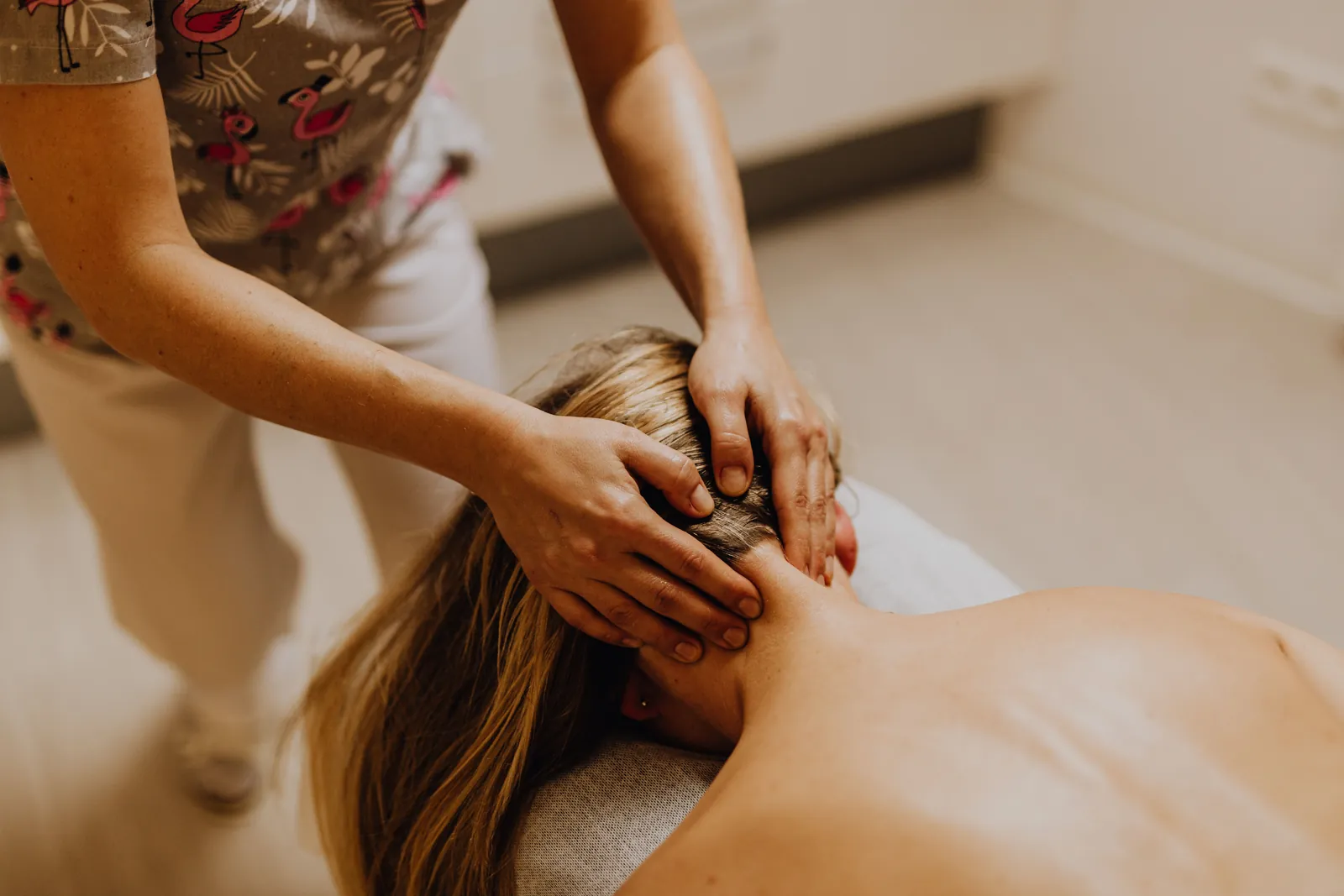
There is very often a conflict with massage between what little evidence there is for its efficacy and the lived experience, as a massage therapist and as a long-term massage client as well. I think it's reasonably well established that massage can buy you some short-term relief from the pain, and anecdotally we've got tons of examples of clients who would very happily state that having massage has eased their neck and shoulder pain. That is worth something on its own, even though it is not the same as a measured effect.
2. It can make moving feel less guarded
Massage can reduce guarding, and it can provide a window where getting some of that gentle movement and exercise in is easier because the pain is reduced. That is what to do with the easier hours afterwards, because NICE's advice to clinicians is to encourage a return to normal activity as soon as possible. Movement is medicine, as we always say.
3. It does not fix what caused it
A treatment that ends when you get off the table cannot change the eight hours a day that produced the problem. Nor does it release knots, break down scar tissue or realign anything, whatever you may have been told.
4. One session is unlikely to be enough to test it
The one signal in the review that favoured massage came from the higher-dose trials: eight or more sessions over four weeks, of thirty minutes or more each. Most of the dummy-massage trials gave a single session, which is part of why the evidence is rated low certainty. So if you try one session and feel no different a week later, that was not a fair test of the idea.
5. Feeling sore afterwards is common and short-lived
In one small study of a hundred massage clients, about one in ten reported some minor discomfort afterwards. Most of it began within twelve hours and had gone within 36. Some people also feel dizzy or light-headed afterwards, more often after firm work on the neck.
Neck Symptom by Symptom: What It Usually Means
| What you're feeling | Usual explanation | What tends to help | When to get it checked |
|---|---|---|---|
| Stiff, achy neck and shoulder after a long day | Non-specific neck pain, usually several causes at once | Keep moving, heat or a cold pack, neck exercises | Still there after a few weeks |
| Woke up with the neck locked to one side | An awkward sleeping position | Gentle movement, one low firm pillow, painkillers if you use them | Not easing after a few days, or you cannot move the neck |
| Neck sore or stiffer the day after a massage | Ordinary treatment soreness | Not much: it usually goes within 36 hours. Tell your therapist so next time is lighter | Worse rather than better, or lasting beyond a couple of days |
| Neck pain with pins and needles, weakness or a cold arm | Possible nerve involvement | Do not self-manage this one | Urgent GP appointment or 111 |
| Stiff neck with fever, severe headache or light hurting your eyes | Not a muscular problem | Nothing at home | 999 or A&E |
“There is no silver bullet. Massage on its own will be a lot less effective than pairing it with gentle movement, shifting position at your desk, getting your sleep set-up dialled in, getting stronger and managing stress.”
How to Prevent It Next Time
- Break up the hours, not the posture: the NHS advice is not to keep your neck in one position for a long time. Get up, look out of a window, turn your head. That matters more than sitting up straight.
- Sort the pillow: head level with the rest of your body, one low firm pillow rather than a stack, and not face down.
- Heat or cold, done properly: a hot water bottle in a tea towel for 20 minutes, two to three times a day, or frozen peas wrapped the same way for 5 minutes, three times a day.
- Skip the collar: NICE discourages cervical collars because they restrict movement and may drag things out.
- Keep the exercises going: the NHS neck rotation and neck stretch are free and need no kit, and they are worth carrying on with after the pain has gone.
- Use NHS physiotherapy if it drags on: in much of England you can refer yourself to community musculoskeletal services with no GP referral and no diagnosis.
When to Speak to a Doctor
Most neck pain settles by itself, and none of the following belongs on a massage table. The main things would be severe pain that starts suddenly or gets worse really quickly, and pain between the shoulder blades, because chest pain doesn't necessarily have to be around the front.
See a GP if:
- pain or stiffness has not gone after a few weeks
- paracetamol or ibuprofen have not helped
- you are worried about the pain
- shoulder pain is worsening, or no better after 2 weeks
Ask for an urgent GP appointment or call 111 the same day if:
- the pain starts suddenly and is severe, or is getting worse quickly
- heaviness or weakness in your arms or legs
- pins and needles in an arm as well as neck or arm pain
- pain between your shoulder blades
- the pain started after an injury or accident, like a fall
- you feel feverish or unwell with it
This last group is less common, but arguably even more serious and probably grounds to call 999.
Call 999 or go to A&E if:
- a stiff neck with a fever, a very painful headache, or not being able to look at bright lights
- face drooping on one side, not being able to lift both arms, or slurred speech
- new problems walking, or loss of bladder or bowel control
If in doubt, NHS 111 online can tell you what to do next.
Common Questions
Why is my neck sore after a massage?
In most cases, it is ordinary treatment soreness. Among people treated for neck or back pain, the commonest reactions to hands-on treatment are soreness, increased pain and stiffness, and they pass. Our guide to what to do after a massage covers the rest of the aftercare.
Is a stiff neck after a massage normal?
Usually, yes, as long as it is mild and easing. It's quite common after deep tissue work to have some soreness the following day, and that doesn't necessarily mean damage has been done. It will almost always settle within a few days. Let your therapist know so they can use lighter pressure next time.
What type of massage is best for neck and shoulder pain?
No evidence names a winner, and the type matters less than who is doing it. Harder pressure does not necessarily equal better results, especially with some of the muscles around the head and the neck, which are quite fine, reasonably delicate muscles. What matters more is that the therapist works the upper back and shoulders too, not just the sore spot. If you want firmer work, deep tissue massage is the usual choice, and our therapists will adjust the pressure if you ask.
How often would I need a massage for it to make a difference?
The only dose that showed anything in the Cochrane review was eight or more sessions over four weeks, half an hour or longer each. Single sessions showed no benefit. Soft tissue work is not an overnight cure, and anyone telling you it is is basically lying to you.
Can a massage make neck pain worse?
It can leave you sorer for a day or so, which is not the same as worse. Sharp pain, pain spreading down an arm, or pain accompanied by pins and needles is not ordinary treatment soreness and needs looking at.
Can I use a massage gun on my own neck?
Not on the front or the sides. I see people doing it, and I don't know how they tolerate it, because I think it feels horrible, but it's also just not a very good idea, so I wouldn't recommend that at all. Our massage gun guide lists the areas to keep it away from.
Summary
- Massage usually makes a stiff neck and shoulders feel easier for a while, and it is low risk.
- Against a dummy massage, the measured difference in pain and function was little to none, on low-certainty evidence.
- Most neck pain settles in days or weeks. Keep moving, break up the hours, sort the pillow, keep up the exercises.
- Sudden severe pain, weakness or pins and needles in an arm, or a stiff neck with a fever: 111 or 999, not a massage.
Medical Disclaimer: This article is for educational purposes and is not a substitute for medical advice.