
Foot Massage Pressure Points: What They Do (and How to Use Them Safely)
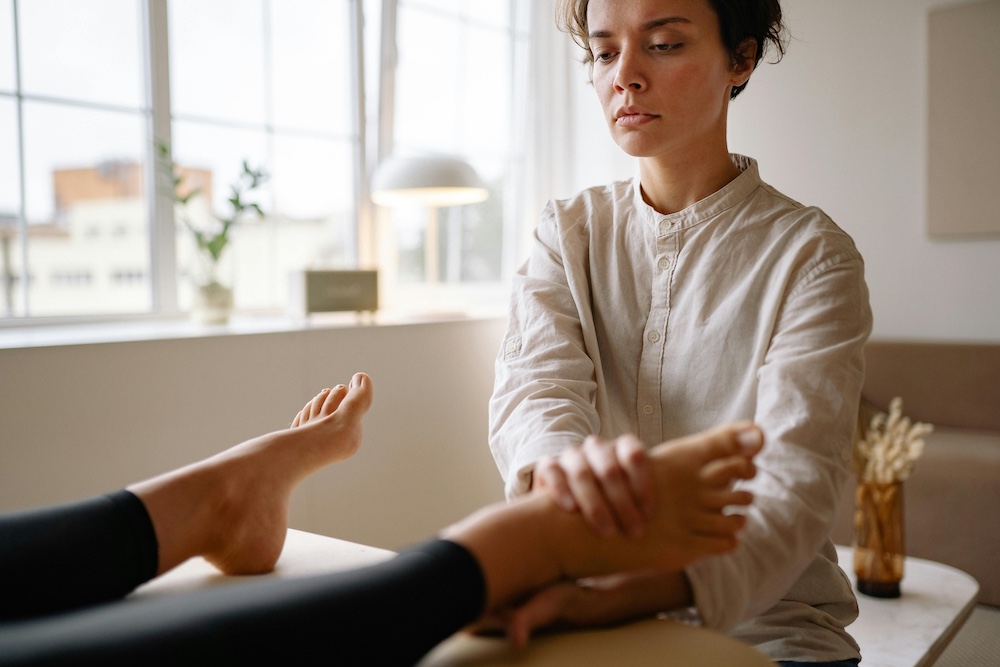
Foot massage pressure points can make tired, achy feet feel calmer and more comfortable by reducing pain sensitivity and tension. This guide explains which areas to focus on, how much pressure to use, and when massage helps – and when it’s not the right tool.
Massage for Achilles Tendinopathy: What to Do – and What to Skip
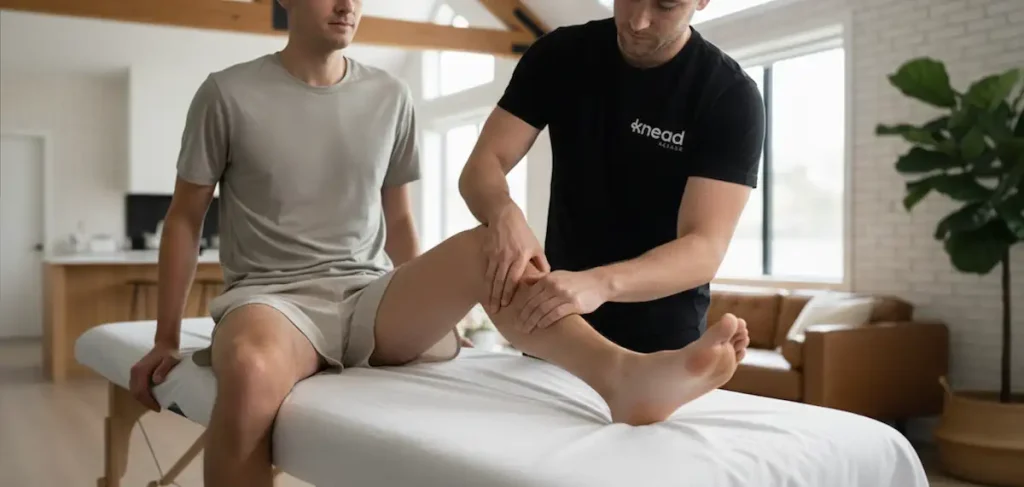
Massage can ease Achilles pain short-term, but lasting improvement usually comes from pairing this with managing load and rebuilding calf strength. This guide explains when massage helps, when it can backfire, and how runners use it safely alongside rehab.
Massage for Shin Splints: What Helps in Practice
Shin splints are frustrating because they often feel manageable during a run, then ache later that day or the next morning.
This guide explains when massage can genuinely help, when it’s more likely to make things worse, and how to use it alongside simple load and strength changes that actually settle shin pain.
Massage for Runner’s Knee: What Helps Knee Pain After Running (and What to Avoid)

Knee pain after running can be confusing – it settles, flares, then comes back just when training ramps up again. Massage is often part of the conversation for runner’s knee, but knowing when it helps, when it doesn’t, and what actually drives recovery can make all the difference.
Massage for Plantar Fasciitis: What Helps Heel Pain (and What to Avoid)

If you’ve got plantar fasciitis, it’s easy to assume you need someone to “loosen the foot”. Sometimes massage helps a lot. Sometimes it makes symptoms worse – especially if the sore heel area gets hammered while the real driver (irritability + training load) stays the same.
This guide explains what massage can realistically help with (in plain terms), what it can’t fix on its own, and how to use it as part of a plan that actually gets you moving comfortably again.
Massage for Piriformis Syndrome: What Helps Deep Glute Pain (and What to Avoid)
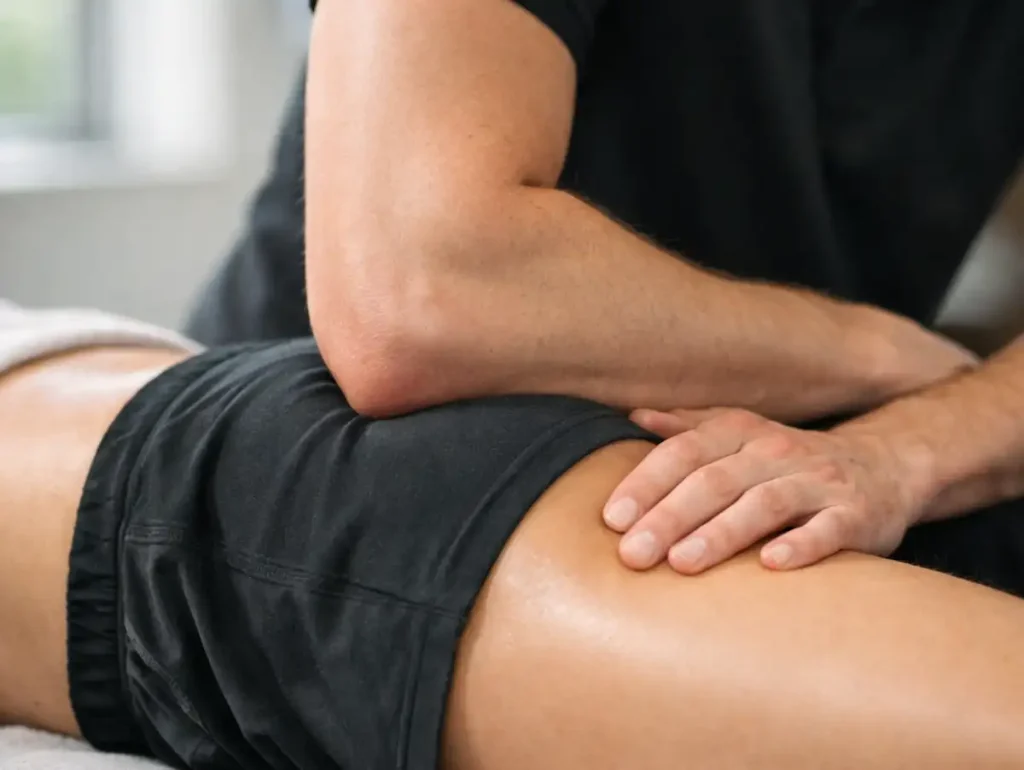
Deep glute pain in runners is often labelled “piriformis syndrome”, but the reality is often more complex. Massage can help reduce guarding and pain sensitivity – especially through the glute medius and deep hip rotators – but lasting improvement depends on how load and strength are managed alongside treatment.
Massage for Running Injuries: Plantar Fasciitis, Shin Splints, Knee Pain, Achilles & Hip Pain (What Helps, What Doesn’t)
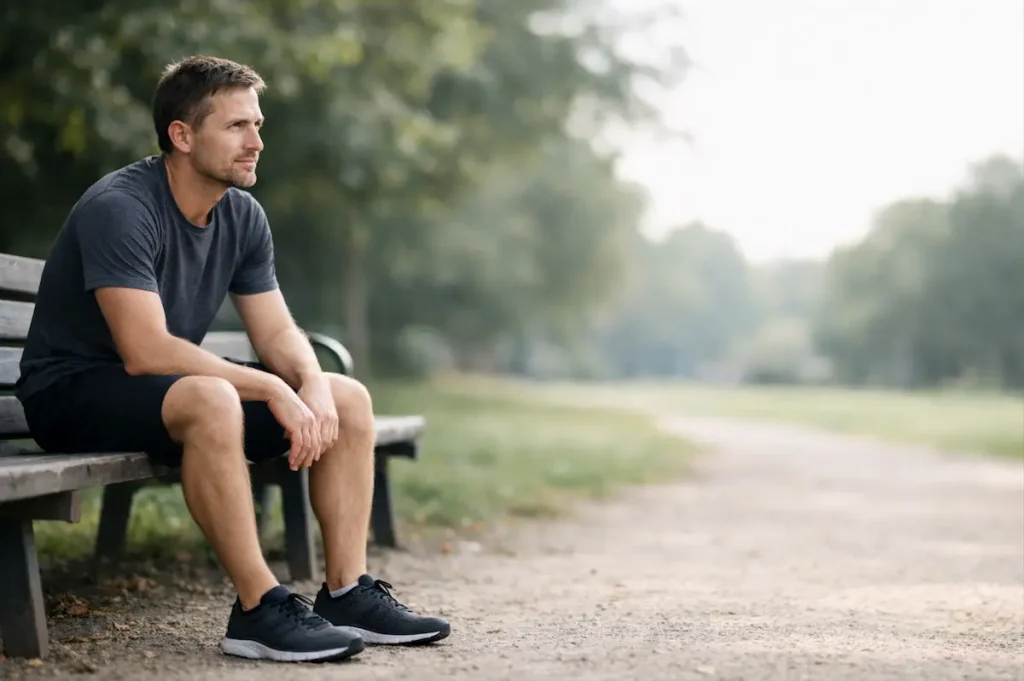
If you’ve got plantar fasciitis, knee pain, shin splints, Achilles irritation, hip pain, or “piriformis” symptoms, it’s easy to assume massage is the answer. Sometimes it is. Sometimes it makes things worse – especially if you’re chasing short-term relief while the underlying load problem stays the same. This hub guide explains what massage can genuinely help with (in plain, practical terms), what it can’t fix, and how to use it as part of a plan that actually gets you moving comfortably again.
Bruising After Massage: Is It Normal? (Sports Massage, Deep Tissue + Massage Gun)
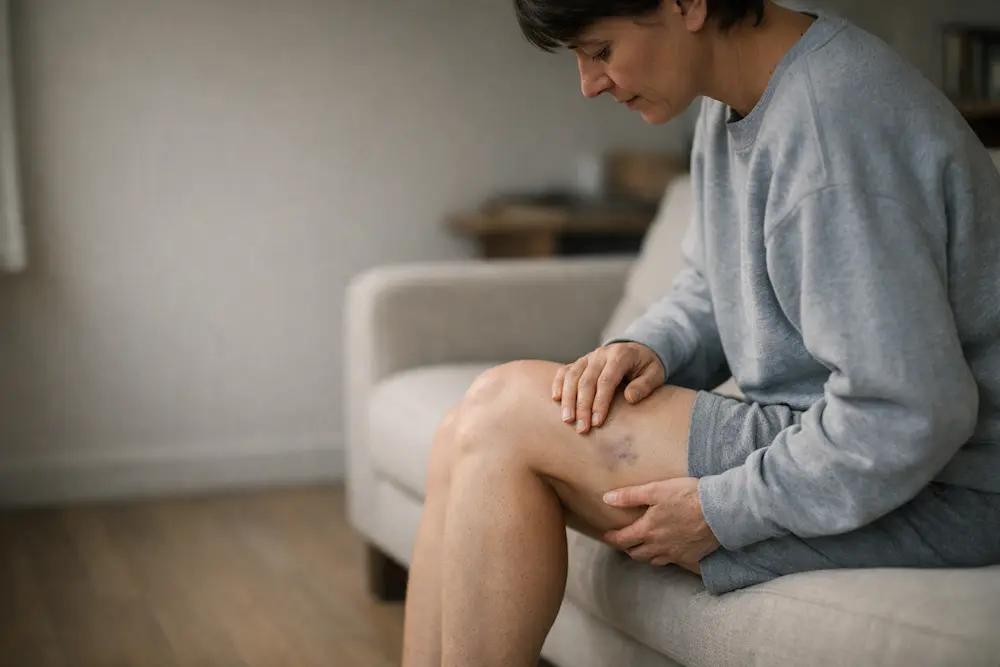
Noticing bruises after a massage can be unsettling – especially if you weren’t expecting it. The good news is that mild bruising after massage is usually normal, particularly after deep tissue or sports massage. But bruising can also be a sign the pressure was too intense for your body that day, the tissue was already irritated, or you’ve got a higher bruising tendency than you realised.
What To Do After a Massage (Simple Aftercare Advice That Actually Helps)
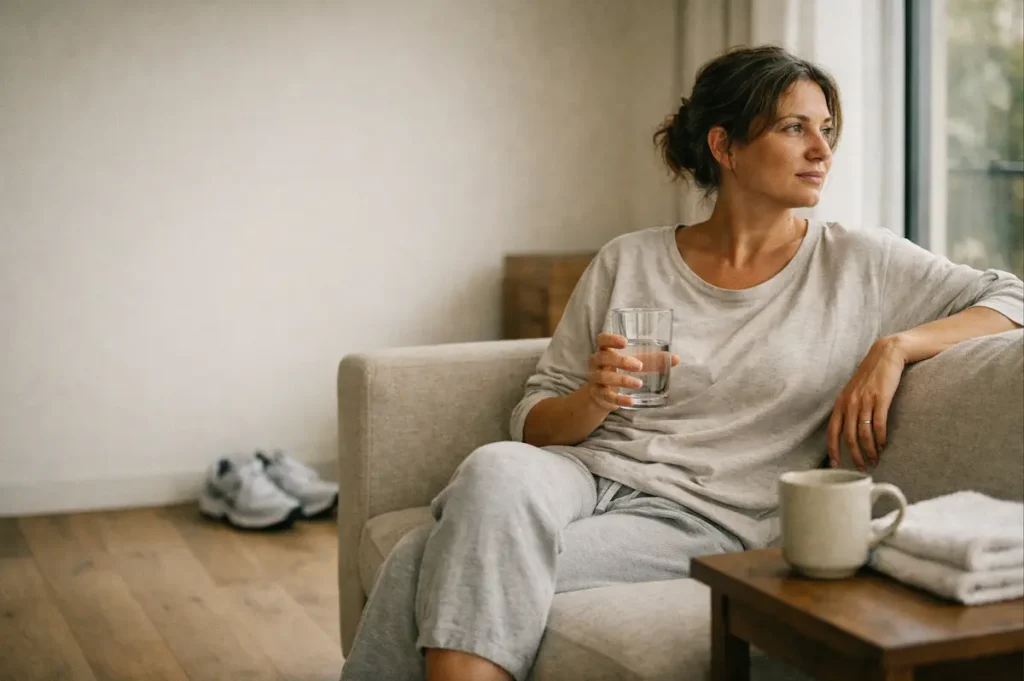
You’ve booked your massage, got off the table… and now you’re wondering what you should do next. Should you stretch? Drink loads of water? Go for a run? Have a hot bath? Do nothing?
This guide is for anyone who feels sore, sleepy, or unsure what to do after a massage – especially if you’re training, managing pain, or brand new to treatment.
Massage Guns Explained: Benefits, Risks & How To Use

Massage guns have become a popular self-care tool for easing muscle tightness and speeding up recovery – but they’re often misunderstood and easy to misuse. This guide explains what massage guns actually do, where they can help, where they can cause problems, and when hands-on treatment from a qualified massage therapist is the better option.